When booking forklift training for your workforce, it is easy to compare quotes and choose the cheapest option on paper. However, selecting a training provider based solely on daily rates often leads to hidden costs: invalid certificates, HSE compliance breaches, or poorly trained operators who cause pallet and racking damage.
Under the Health and Safety at Work etc. Act 1974 and HSE Approved Code of Practice (ACOP L117), the legal responsibility for ensuring operators are competent rests directly on the employer.
Before booking your next training session, use this checklist to ensure your provider delivers compliant, high-standard instruction.
1. Recognised Accreditation (ABA Standards)
The most critical factor is verifying the instructor’s accreditation body. In the UK, legitimate forklift training aligns with the Accrediting Bodies Association for Workplace Transport (ABA) standards, which include bodies such as:
- AITT (Association of Industrial Truck Trainers)
- ITSSAR
- RTITB
- NPORS
An accredited instructor follows standardised practical tests, theory examinations, and pre-use inspection criteria. Always ask for the instructor’s registration number and accrediting body. Unaccredited “in-house certificates” from unverified third parties often fail insurance audits after an incident.
2. Comprehensive Insurance Coverage
Training involves heavy machinery operating around expensive stock and warehouse infrastructure. A reputable commercial training provider should readily provide proof of:
- Public Liability Insurance (typically £5m–£10m coverage)
- Professional Indemnity Insurance
Never hesitate to request an up-to-date copy of their insurance certificate before work begins on your site.
3. Instructor Experience and Industry Knowledge
Operating a forklift is very different from teaching someone else to operate one safely. The right instructor brings:
- Years of practical hands-on operating experience across various truck categories (Counterbalance, Reach, Bendi/Flexi, VNA, Telehandlers).
- Genuine teaching credentials and patience with novice learners.
- An understanding of live warehouse environments, pedestrian segregation, and real-world loading bay pressures.
Trainers who only teach theory from a slide deck cannot prepare operators for real-life warehouse hazards.
4. On-Site Training on Your Machinery and Racking
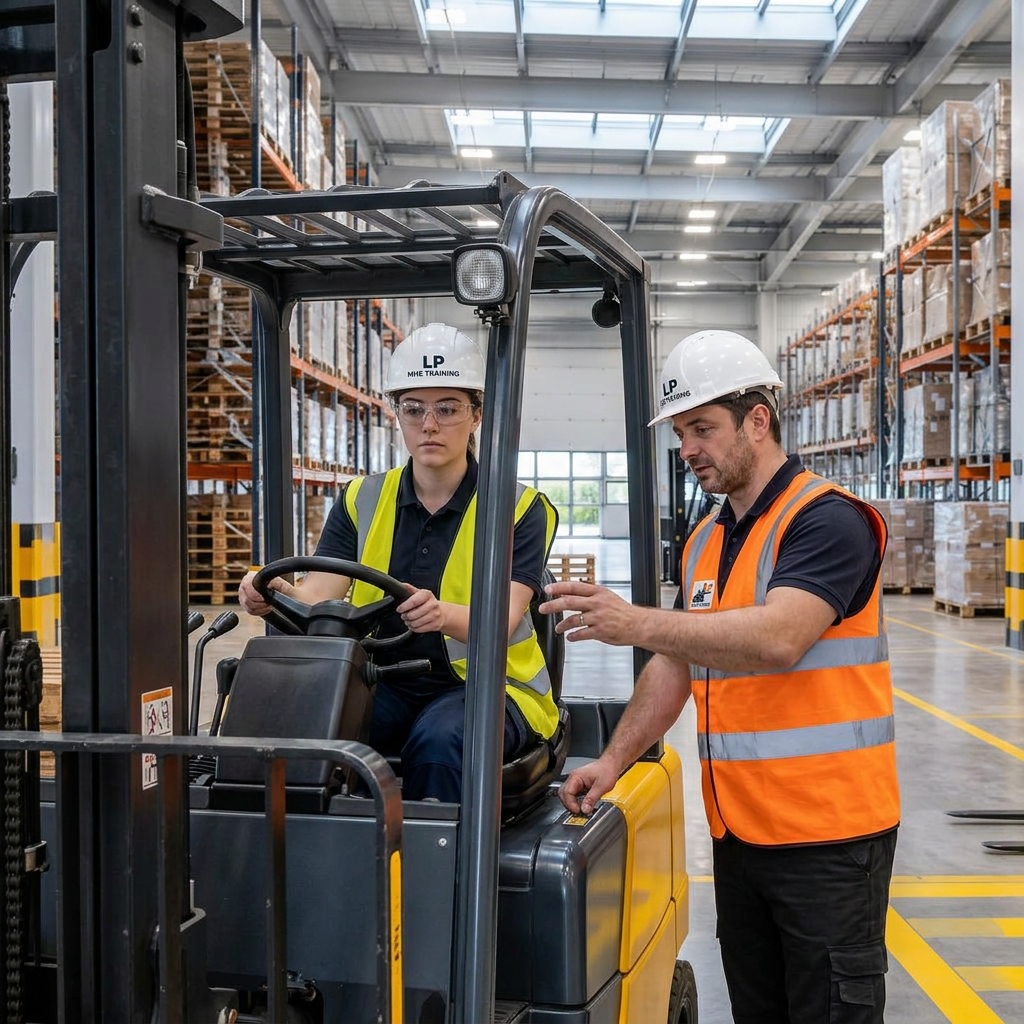
While off-site training centres have their place, on-site training at your own premises offers significant advantages:
- Familiarity: Operators learn on the exact trucks, aisle widths, and racking systems they will use daily.
- Specific Loads: Training covers your specific pallet types, uneven yard surfaces, or specialised attachments.
- Cost Efficiency: You eliminate travel, hotel, and subsistence expenses for your staff.
Ensure your provider is flexible enough to work around your production schedules and shift patterns without disrupting core operations.
5. Strict Adherence to Candidate Ratios
HSE guidance (L117) clearly stipulates training ratios—typically a maximum of 3 candidates to 1 instructor per truck for practical courses.
Be cautious of providers offering to train large groups in unrealistically short times. If an instructor agrees to certify six novices in two days, individual driving time is compromised, and the resulting certification may not withstand scrutiny in an investigation.
6. Proper Certification and Documentation
A professional provider delivers thorough, traceable post-course paperwork, including:
- Individual practical and theoretical test marking sheets.
- Pre-use inspection assessment forms.
- Nationally recognised accreditation certificates (or registration onto databases like AITT ACORNS).
- Clear recommendations for future refresher dates.
This paperwork forms an essential part of your company’s health and safety audit trail.
Summary Checklist for UK Employers
Before signing off on a training quote, verify:
- Accreditation: Are they registered with a recognised body like AITT?
- Insurance: Have they provided valid Public Liability and Professional Indemnity certificates?
- Location: Can they deliver on-site training on your premises using your equipment?
- Course Length & Ratios: Does the course respect HSE ACOP L117 novice and refresher durations?
- Transparency: Are course fees, registration fees, and travel costs clearly outlined with no surprises?
Need Accredited On-Site Training for Your Team?
At LP MHE Training, we provide AITT-accredited forklift training delivered directly at your company premises across Derbyshire, Nottinghamshire, and the wider East Midlands.
From Counterbalance and Reach trucks to Bendi, Telehandlers, and VNA, our courses are tailored to your machinery and shift patterns.
Request a Business Quote Online or call us directly on 07925 362676 to check available dates.